YOU KNOW
HOW TO LOVE.
YOU WERE
NEVER TAUGHT
HOW TO BUILD IT.
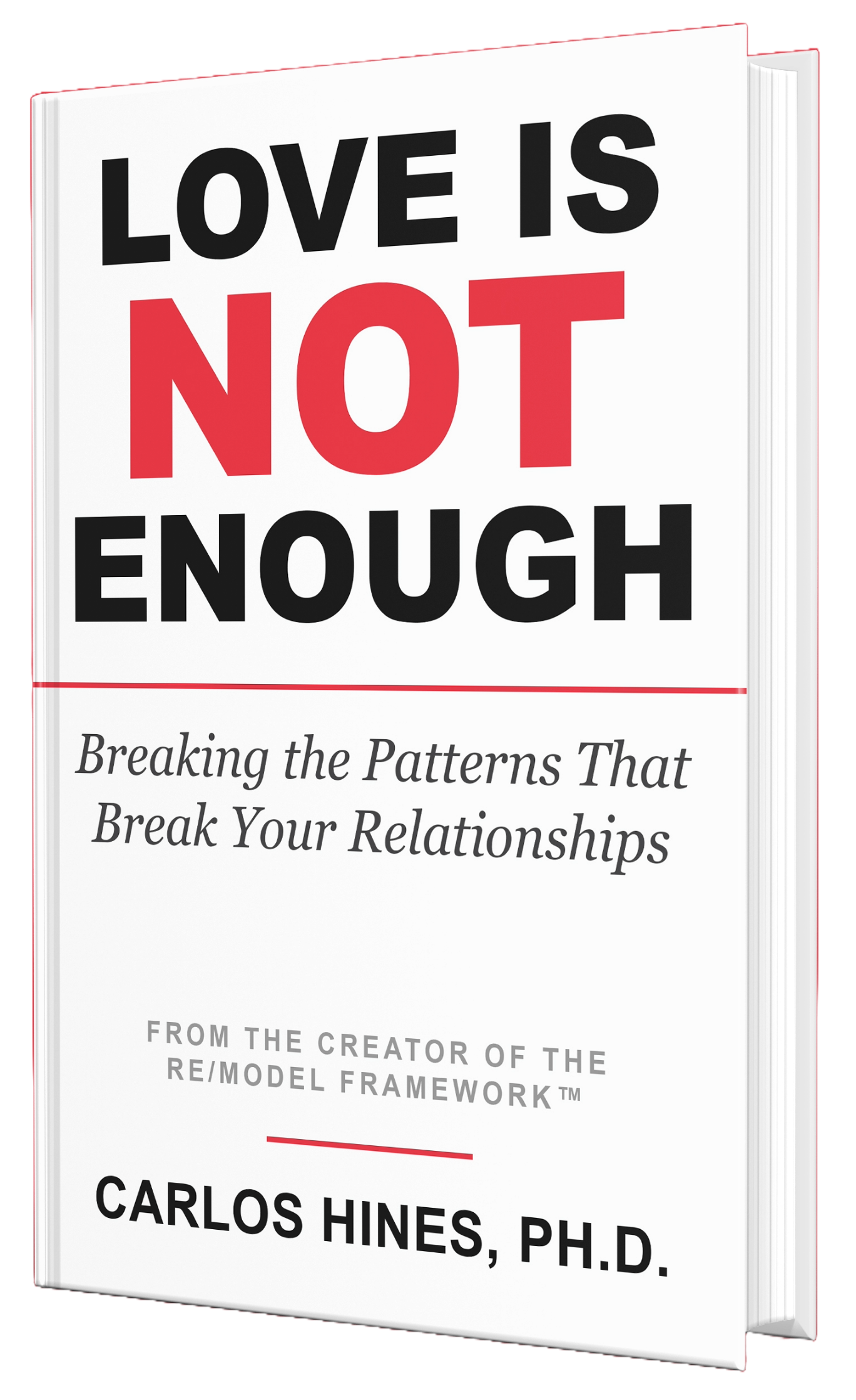
There's a reason it keeps going wrong with people who aren't wrong for you. This book names it.
Creator of the Re/Model Framework™ · PhD, Clinical Psychology
YOUR FEED HAS
GIVEN YOU MORE
RELATIONSHIP ADVICE
THAN EVERY GENERATION
BEFORE YOU COMBINED.
AND HERE YOU ARE.
Ten billion relationship posts. Attachment quizzes. Red flag lists. Sixty-second fixes for the most complex area of your life. You have consumed more content about love than any human being in history.
And you're still in the same patterns.
That's not a willpower problem. That's not a self-awareness problem. That's a depth problem. The feed names symptoms. It was never built to find roots.
THE BOOK
IS NEW.
THE WOUND
ISN'T.
I spent years watching people do everything right and still end up in the same place. Good intentions. Real love. Wrong outcomes. Over and over.
I also lived it.
Before the research. Before the framework. Before the thousand conversations on New York City streets. I was the person sitting across from someone I genuinely loved, with no language for what was happening between us and no tools to stop it from going sideways.
That's what built this work. Not the degree. Not the research — though both came. The thing that built this work was watching smart, caring, willing people destroy something real because nobody had ever given them the actual architecture of how relationships break down.
They knew how to love someone. They had no idea how they were built.
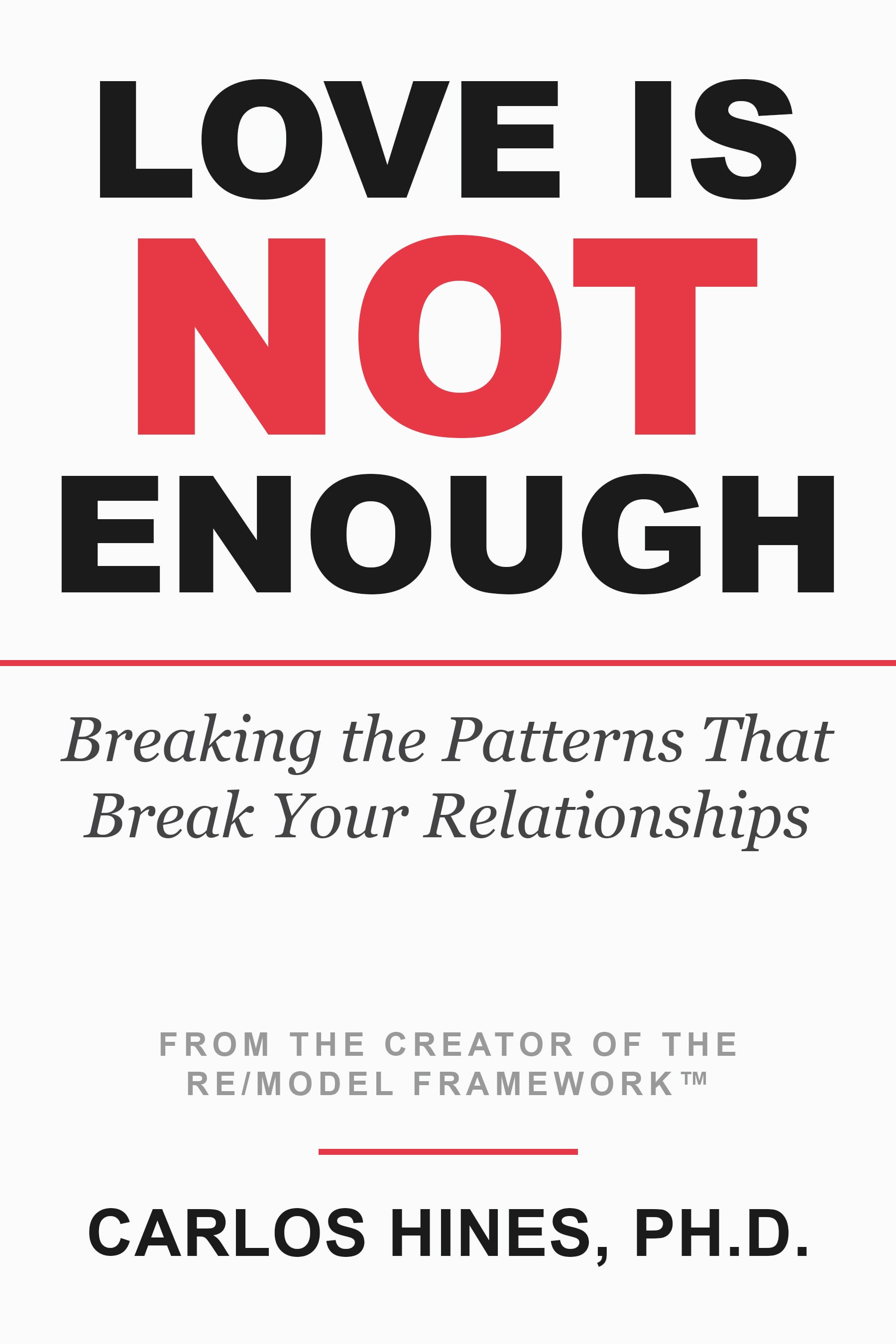
The Re/Model Framework™ is what I wish existed fifteen years ago. Not a self-help system. Not a quiz. A real framework, built on a decade of practice and original research, that tells you exactly what pattern is running your relationships — and exactly what to do about it.
That's the book.
"The question I kept asking in every session wasn't what happened. It was why does it keep happening — to smart people, with good intentions, who genuinely want something different."
— Dr. Carlos HinesTHE STORY YOU'VE
BEEN TELLING YOURSELF
IS THE PROBLEM.
NOT YOU.
Most people don't buy a book about relationships because one of four things is running in the background. Here's what they are — and why they're wrong.
Knowing the name of your pattern and understanding its origin are two completely different things. You've been describing the symptom for years. This book goes to the root. What you know hasn't changed the outcome. This will.
You read books that named what was wrong. This one tells you why it keeps happening — structurally, not philosophically. The Re/Model Framework™ is not inspiration. It's a diagnostic. You don't forget a diagnosis.
The pattern doesn't need a partner to be active. It's running right now — in who you're drawn to, what you avoid, how you end things. Naming it now means the next relationship you enter is entered differently from day one.
Knowing your attachment style tells you how you behave. It doesn't tell you why you keep recreating the same conditions across different relationships with different people. That's not an attachment question. That's a pattern question — and that's a different level of the work entirely.
WHEN EVERYONE SOUNDS
LIKE A RELATIONSHIP EXPERT,
ONLY ONE THING
STILL CUTS THROUGH.
A real book. Research-backed framework. 65,000 words of actual thinking built on a decade of practice and original research. Within the first chapter, readers know it's different because that kind of depth cannot be produced in 60 seconds.
DIFFERENT PEOPLE.
DIFFERENT PATTERNS.
SAME TURNING POINT.
Composites from real clients and Re/Model cohort participants. The details are different. The pattern is not.
She did everything for every relationship she was in. Planned the trips. Held the feelings. Showed up when they didn't. Every partner eventually left and every time, she couldn't understand why giving everything wasn't enough.
She named the pattern. Understood that what she called love had been functioning as a bargain and that the bargain was the problem, not the giving.
She realized she'd been keeping a running score in every relationship — not because she was demanding, but because she'd learned early that love had to be earned back. The giving wasn't love. It was insurance.
He knew he overreacted. He'd apologize every time, mean it every time, and watch the same thing happen again. His nervous system kept score across fifteen years even when he'd decided to move on.
He stopped calling it anger and started calling it fear. The reaction didn't disappear but for the first time, he could see it coming before it arrived.
In the middle of an argument, he heard himself and recognized it — not as his voice, but as a voice he'd been carrying since he was nine years old. The reaction wasn't about his partner. It never had been.
She was the therapist who couldn't stay in her own relationships. Things would go well then something would shift and she'd check out, find a reason, leave. She'd called herself commitment-phobic for so long she'd started to believe it.
She identified what she was protecting. The disappearing wasn't fear of commitment — it was fear of being seen and found lacking especially because of her profession. That was a different problem. One with a different solution.
She'd been leaving every relationship at exactly the same point — right before she would have had to be truly known. Not commitment-phobia. Self-protection. Two completely different problems with two completely different solutions.
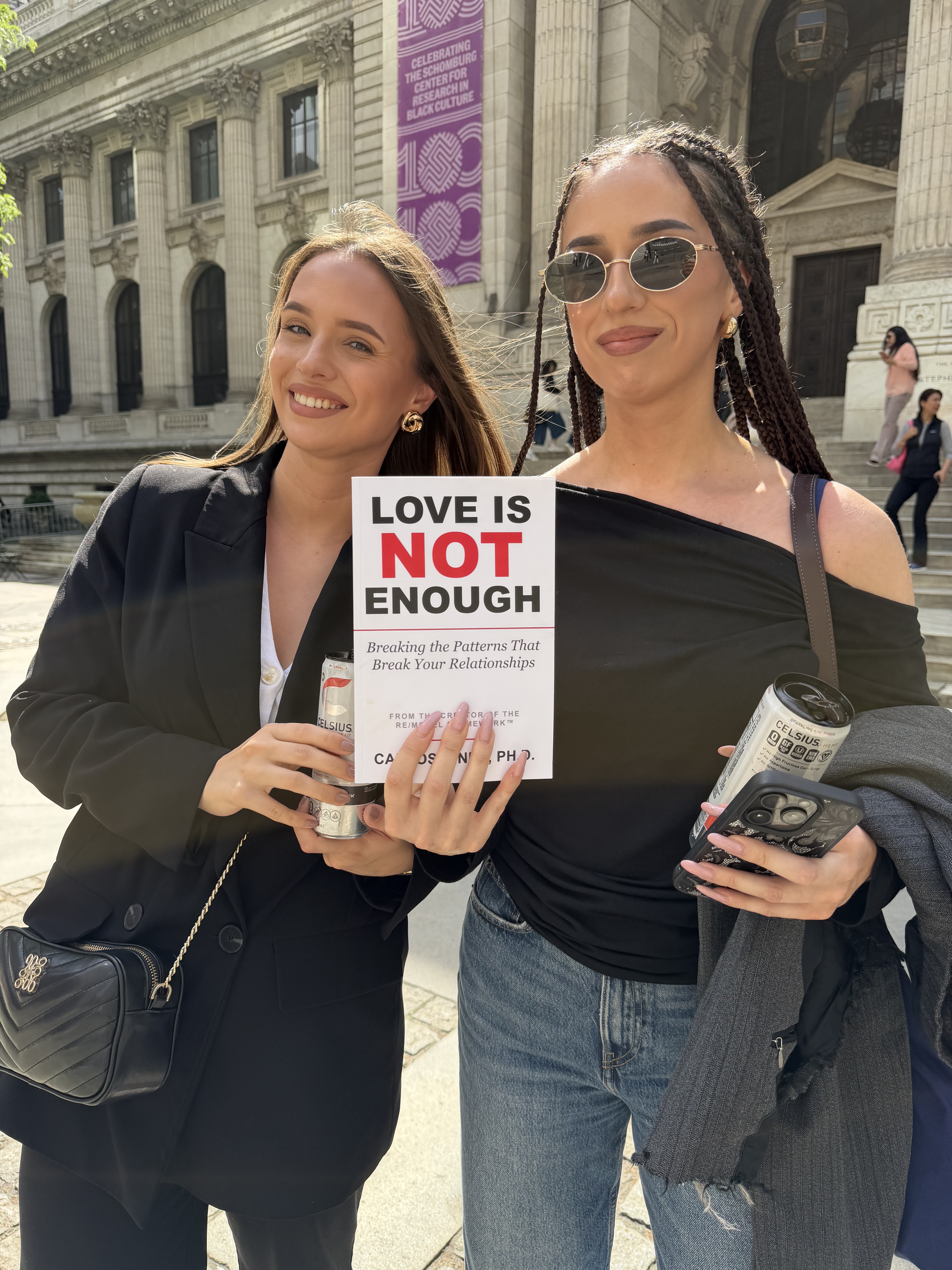
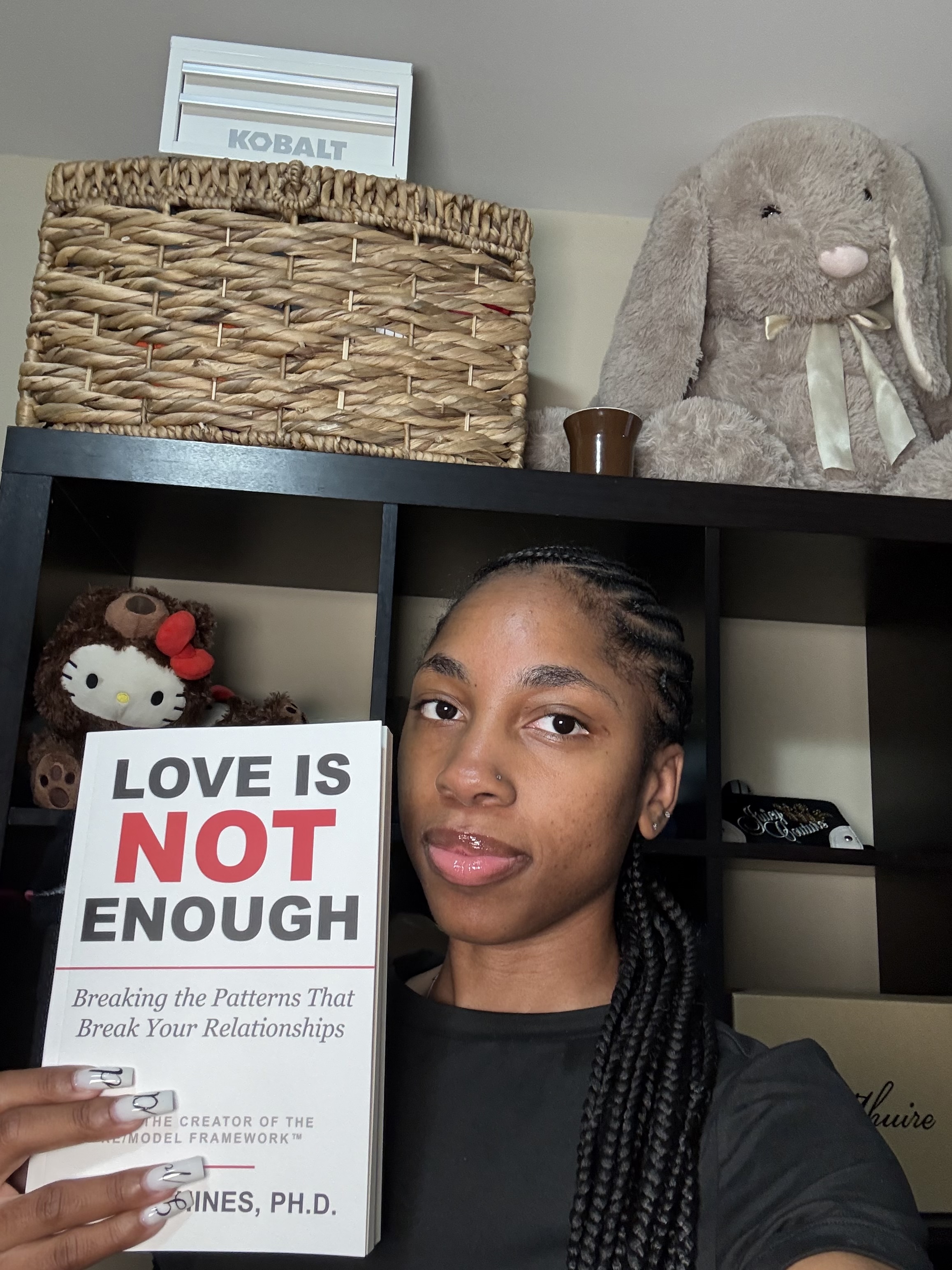
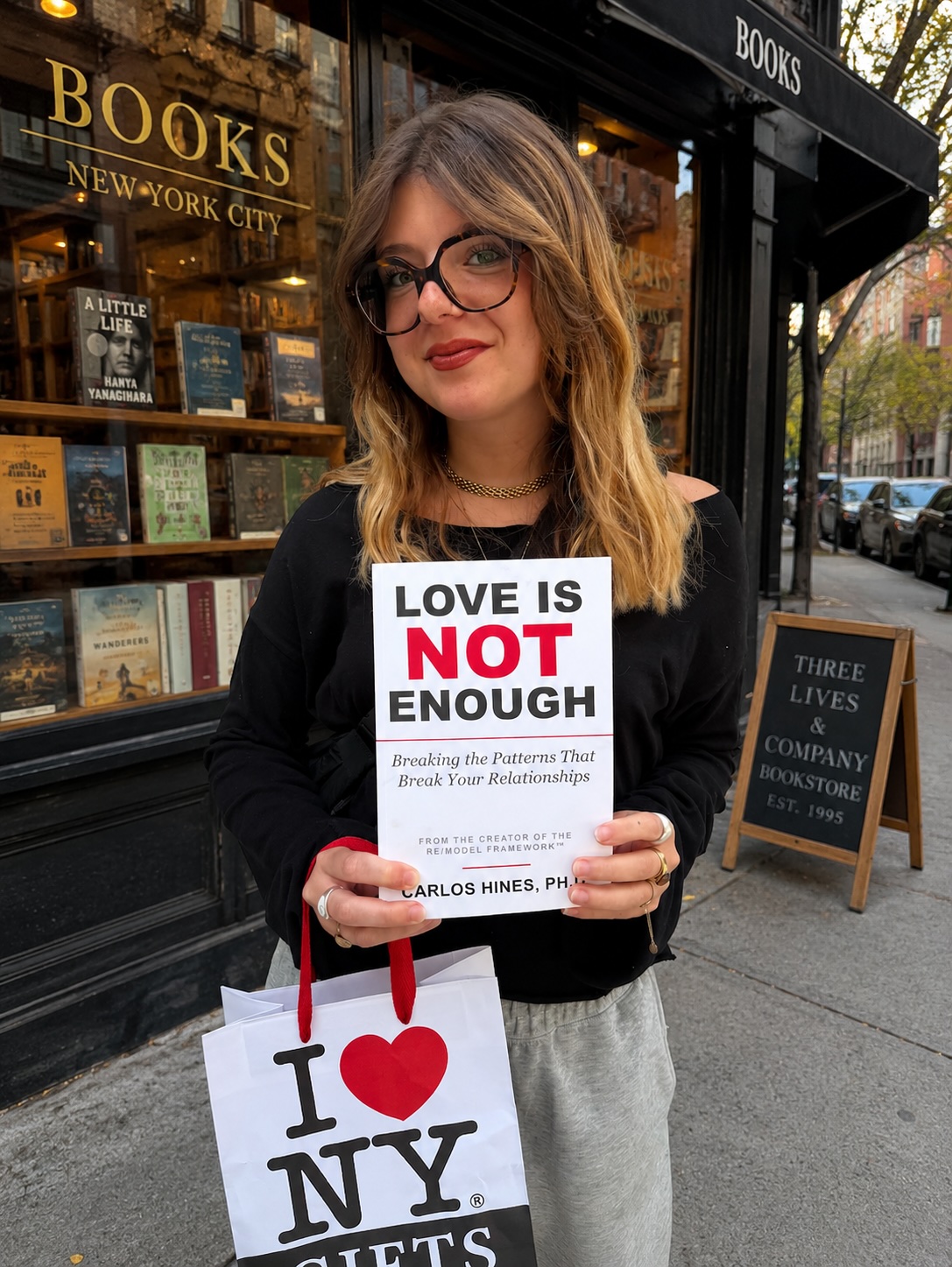
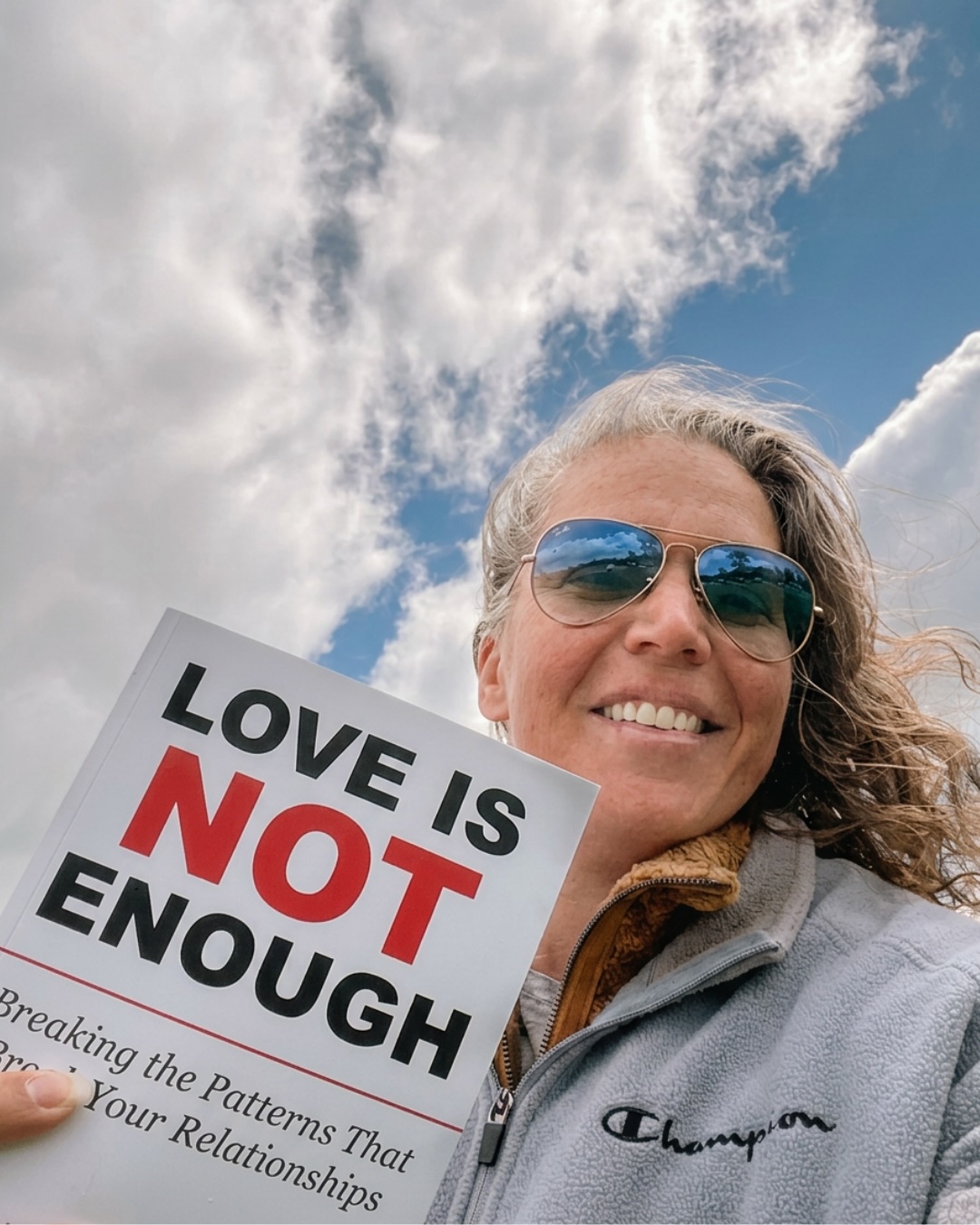
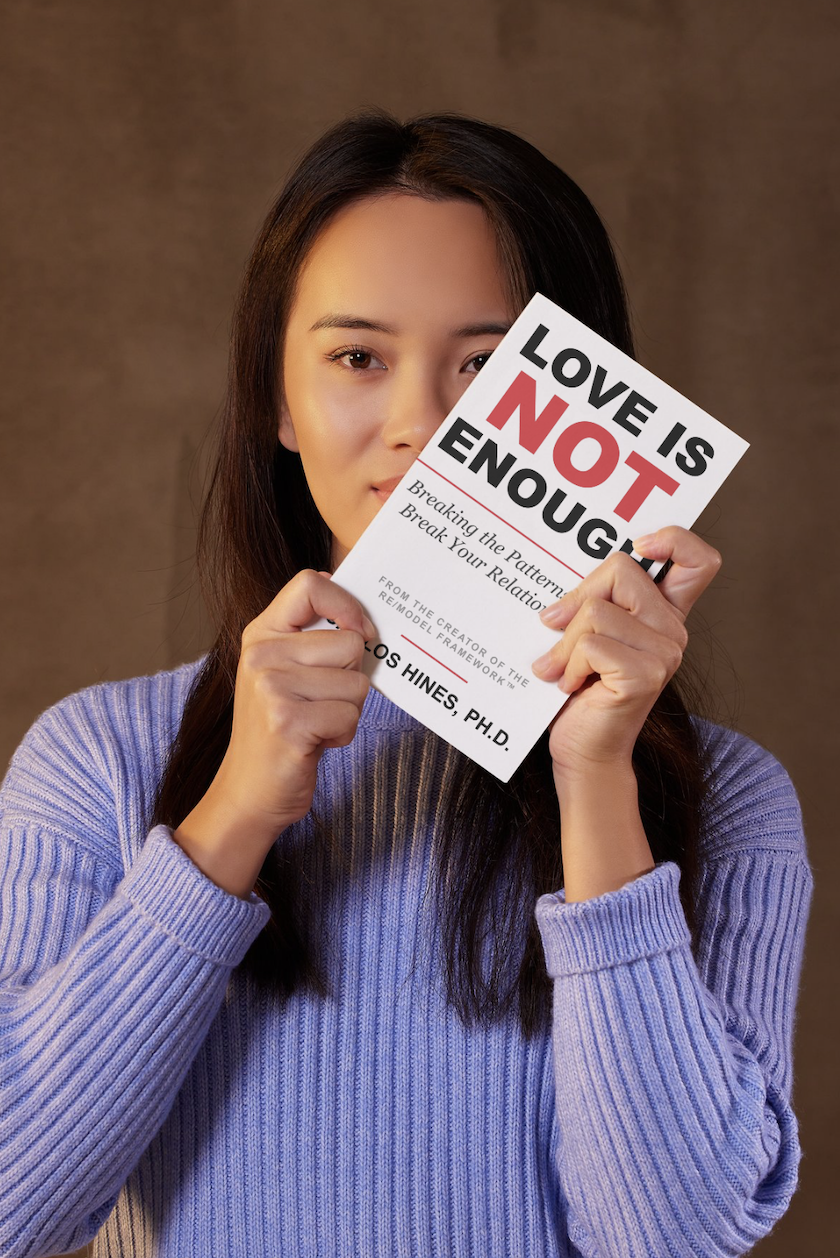
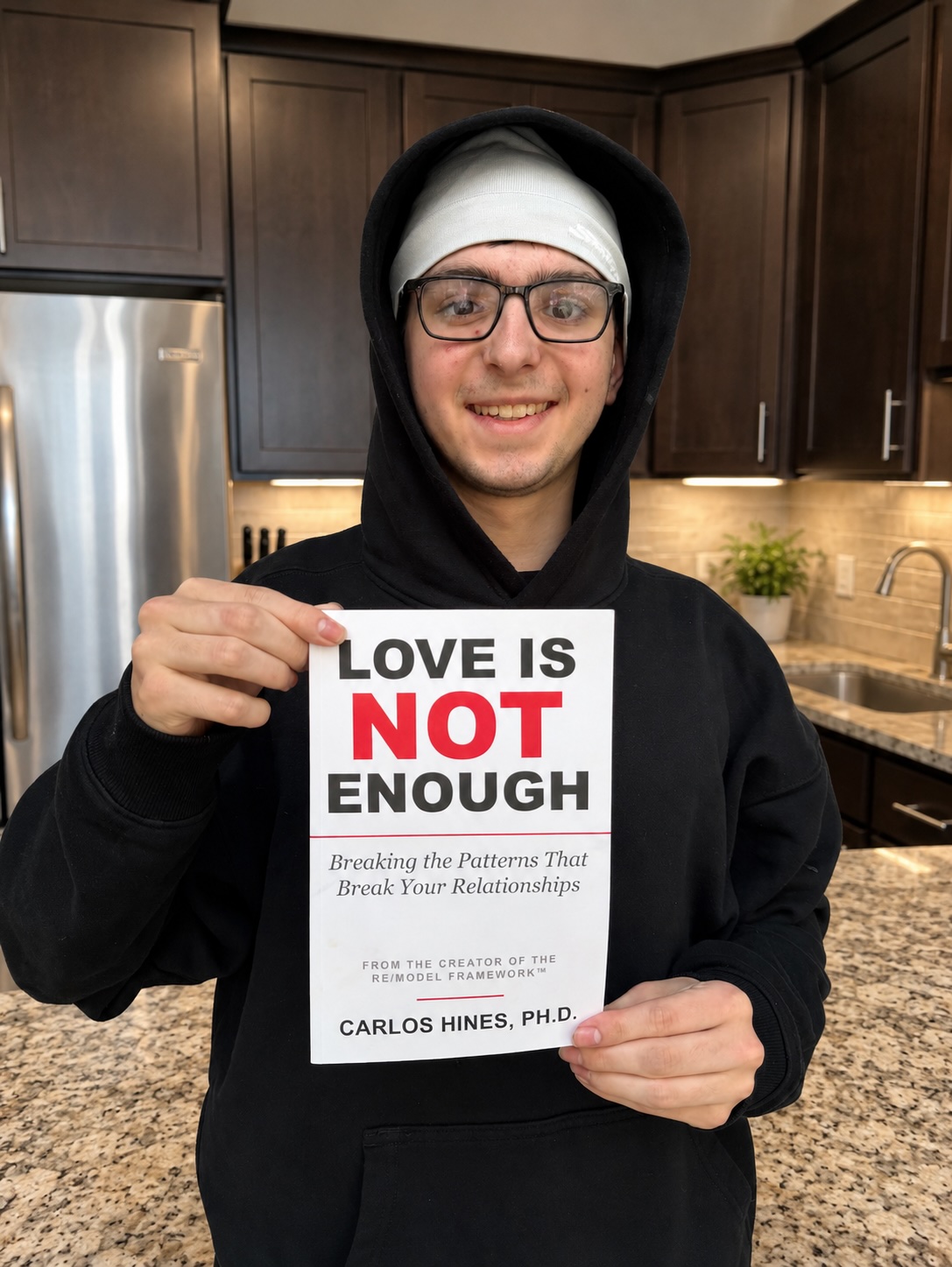
THE BOOK AROUND
THE WORLD.
When the framework clicks, people want to hold onto it.
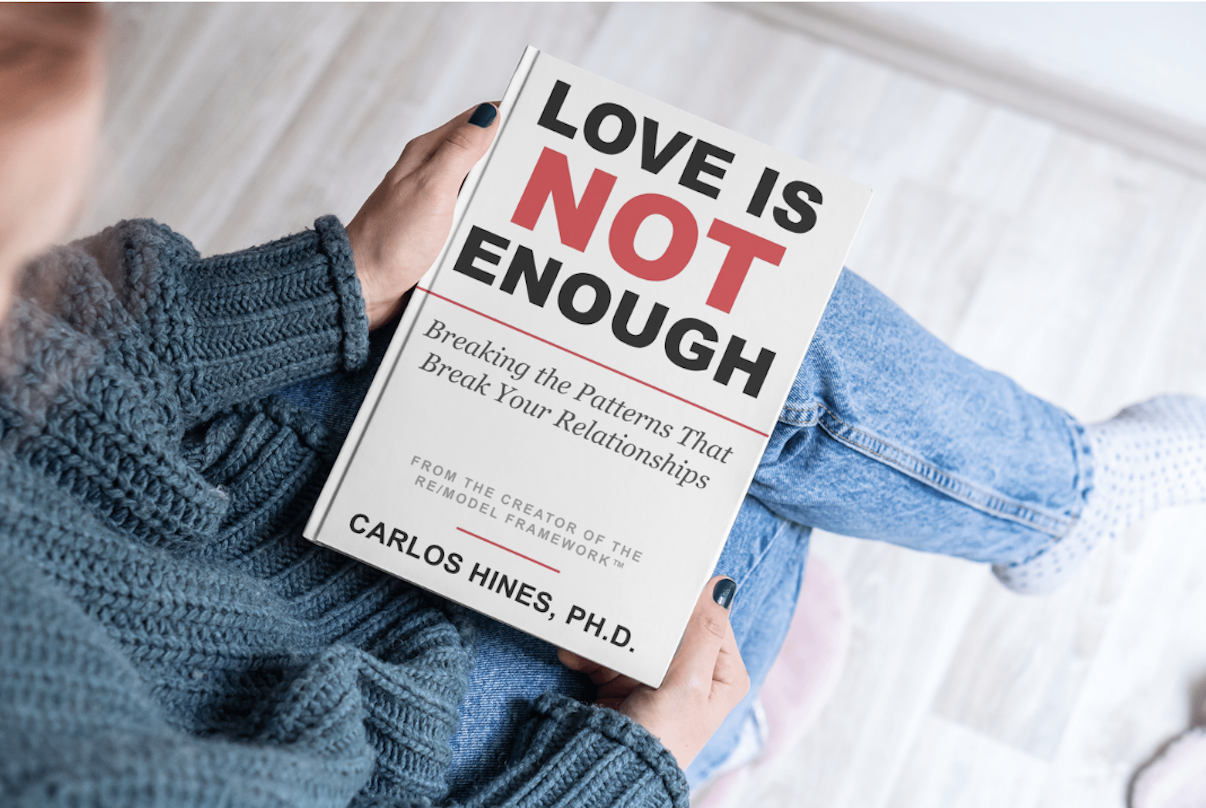

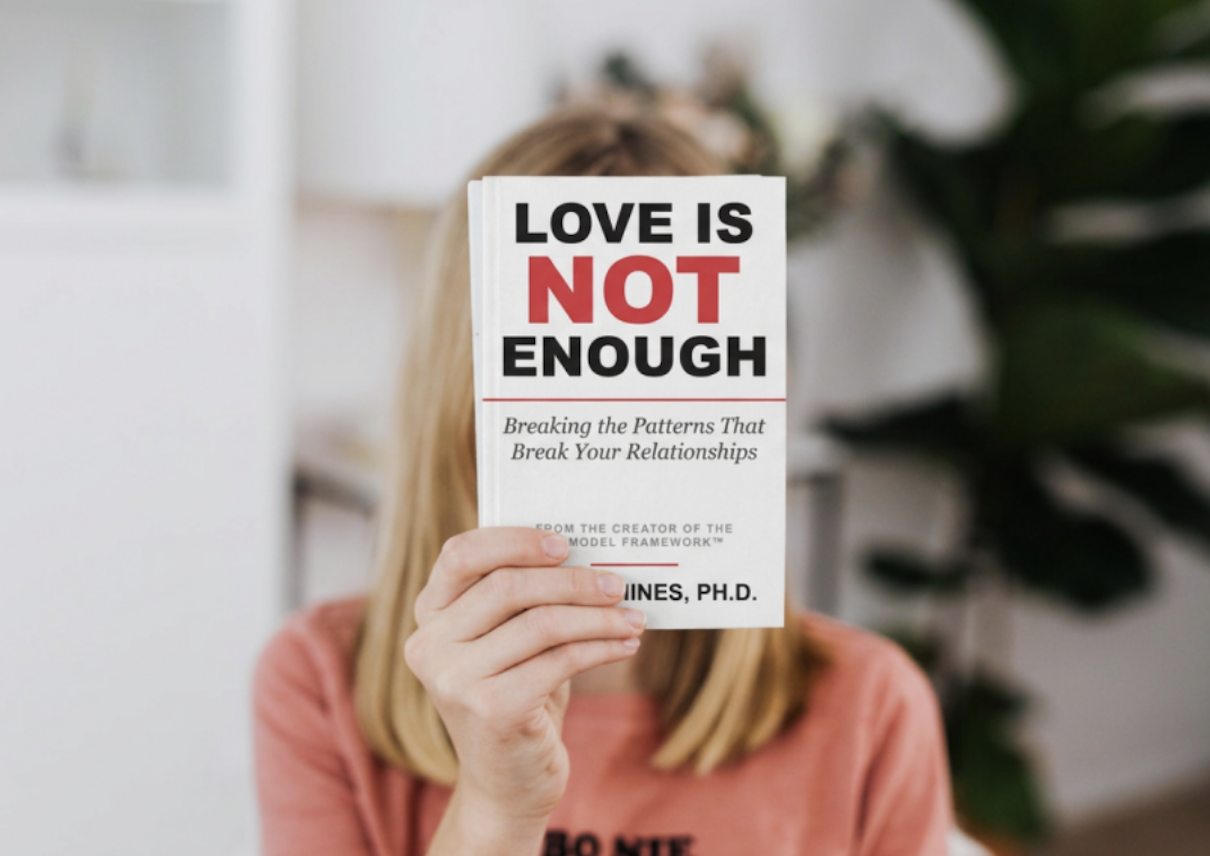
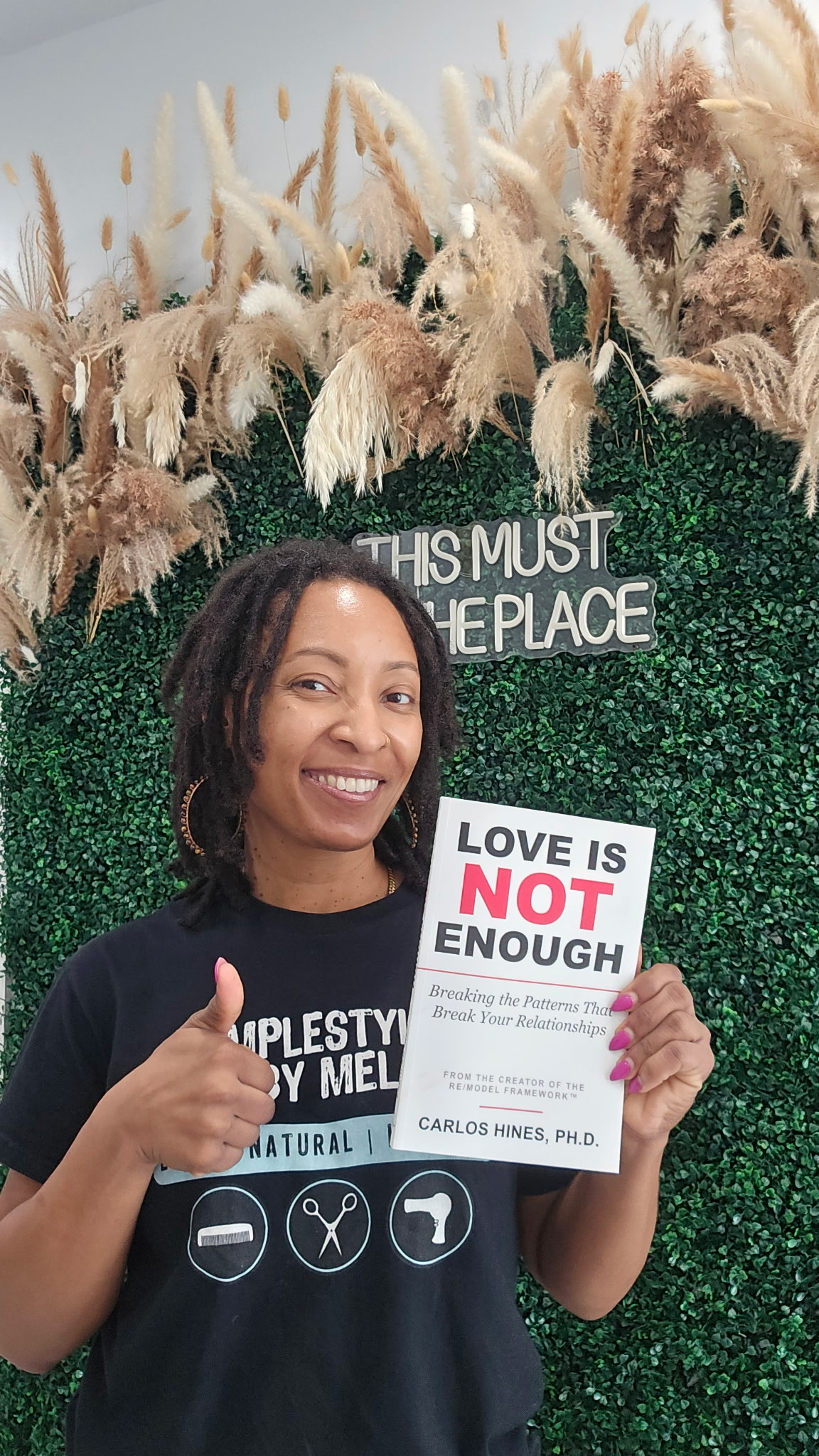
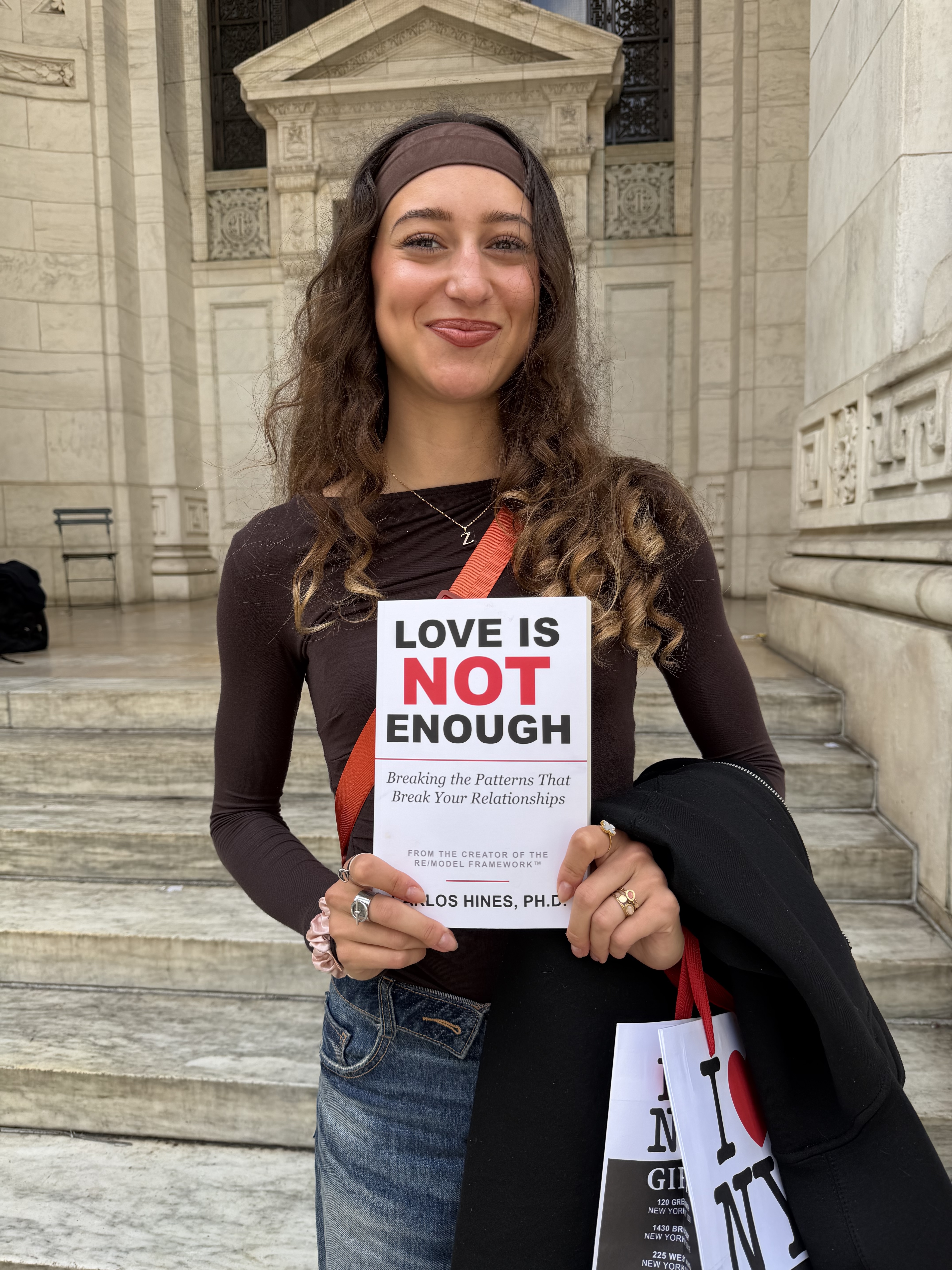
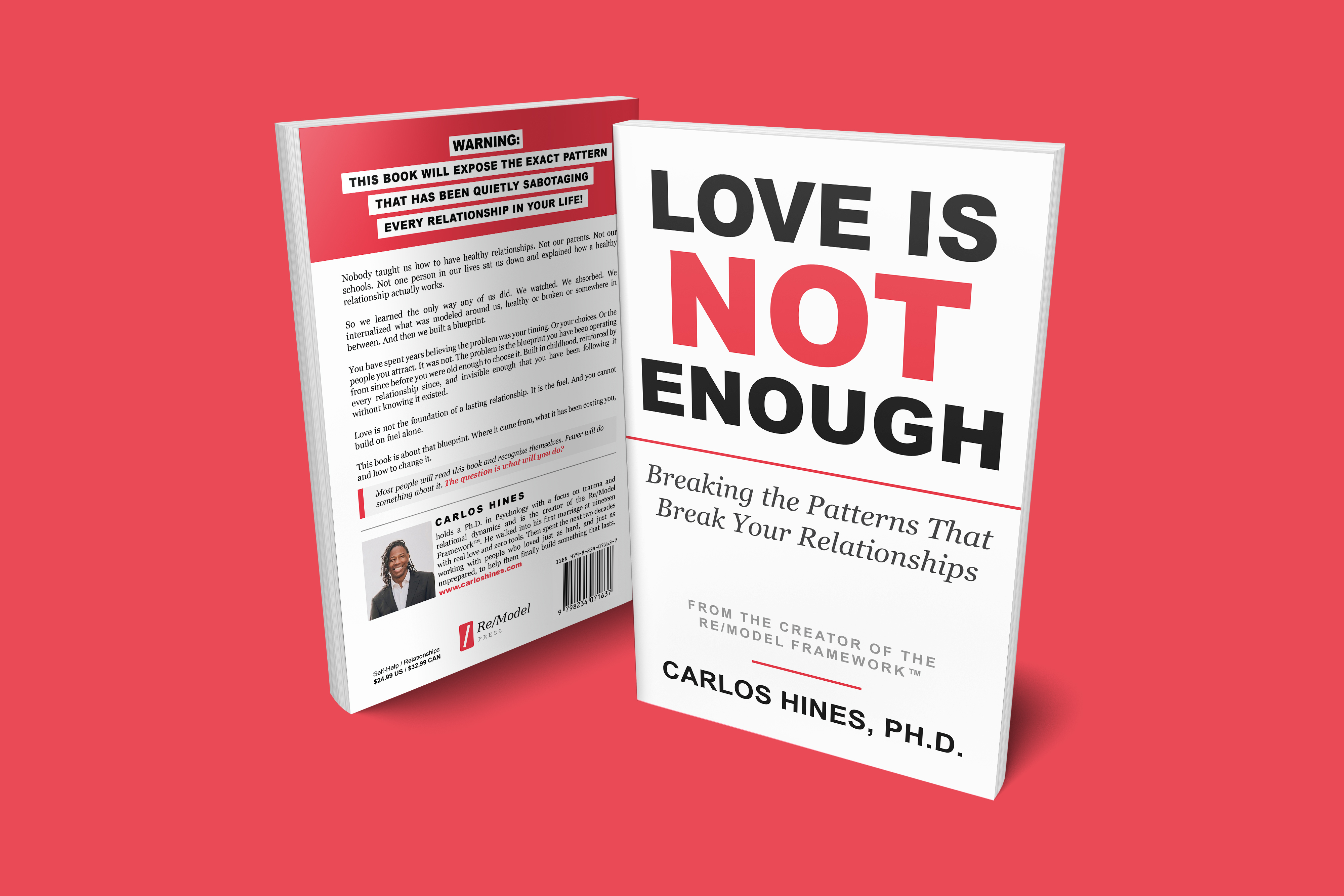
WHICH ONE
ARE YOU?
Most people have been describing their symptoms for years. What they've been missing is the root cause. These are the four patterns and one of them is running your relationships right now.
You're not commitment-phobic. You're protecting something and you pull back right at the moment closeness becomes real.
"Things were going so well, and then I just… checked out."
You've built your entire relational identity around being needed. It feels like love. It functions like a bargain. And when your partner doesn't hold up their end, it reads as betrayal.
"I do everything for this relationship. Why can't they just meet me halfway?"
You don't overreact. You react with the full weight of every time something like this has happened before. Your nervous system keeps score even when you've decided to move on.
"I know I blew up. But it wasn't about what they said it was the way they said it."
You've done the work. Read the books. Had the therapy. You know better and still you can't stop waiting for the other shoe to drop. Trust isn't the issue. Evidence is.
"I want to believe this is different. I just need more time to be sure."
EVERY YEAR YOU DO
NOTHING IS ANOTHER
YEAR YOU REPEAT IT.
This isn't abstract. It has a number. And once you see it, the $4.99 decision makes itself.
Most people don't spend years in the wrong relationships because they don't care. They spend them because no one gave them the tools. This book does that. In one sitting. Before the next relationship costs you another decade.
The only question is whether you read it before or after the next one.
THIS BOOK DOESN'T
GIVE YOU ADVICE.
IT GIVES YOU ANSWERS.
Not the kind that feel good for a week — the kind that fundamentally change how you read a situation before it goes sideways.
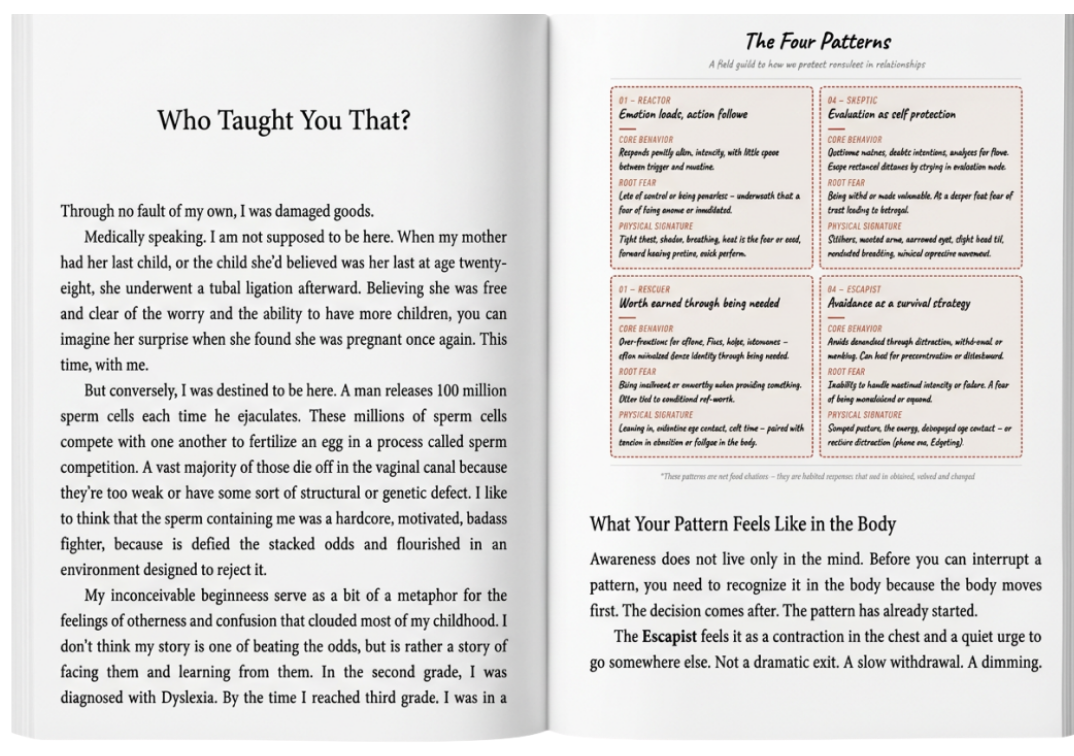

DR. CARLOS
HINES
PhD · Creator of the Re/Model Framework™
Carlos didn't write this book because he had the answers. He wrote it because he too experienced failed relationships, watched too many people in his practice mistake the fact that they loved someone for proof that they knew how to love them well.
His work sits at the intersection of relational psychology, trauma theory, and behavioral pattern research. The Re/Model Framework™ emerged from over a decade of working with individuals and couples and original research conducted in New York City. It is not a self-help magical system. It is a way of seeing. And once learned, it cannot be unlearned.
Dr. Hines has worked with private clients, delivered keynotes to audiences around the world, and established one of the most direct, research-grounded and intellectually rigorous voices in relational psychology today. He doesn't describe the symptoms. He names the source.
THE COMPLETE
BREAK THE PATTERN
BUNDLE.
Everything you need to identify your pattern, understand its origin, and start building something different — starting today.
Three minutes. Your dominant pattern, the specific fears driving it, and a clear picture of how it's showing up right now — built to go alongside every chapter.
The complete visual map of all four patterns: their origins, triggers, and behavioral signatures. A reference you'll return to every time something lands differently than you expected.
A step-by-step protocol for returning to baseline after a relational rupture, before you say the thing that makes it worse. Designed for use in the moment, not after.
Ten targeted exercises. One for each moment where your pattern is most likely to activate. Not journaling prompts. Specific interventions for specific situations.
IMAGINE ENTERING
YOUR NEXT RELATIONSHIP
KNOWING EXACTLY
WHAT YOU BRING TO IT.
Not hoping you've changed. Not trying harder. But knowing with the kind of clarity that only comes from understanding exactly what your pattern is, where it came from, and what it does under pressure.
That's what the framework gives you. Not a better version of the same approach. But a fundamentally different one.
The next conversation you have. The next person you're drawn to. The next moment something familiar starts to unfold, you see it. Before it costs you.
The only question is whether you read it
before or after the next one.